
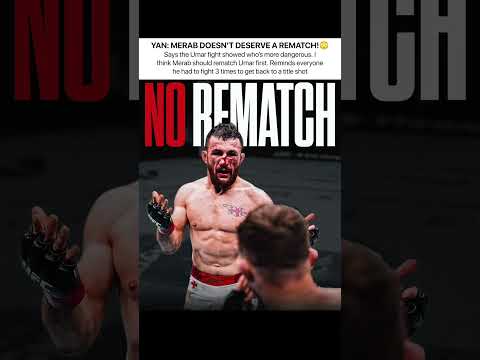
In the electrifying world of mixed martial arts, every bout is a crucible, testing not only skill but also a fighter’s inner fortitude. Within the UFC, this concept of „heart“ carries immense weight, as true champions are defined by their resilience and unwavering fighting spirit as much as by their championship belts. The recent critique leveled by Umar Nurmagomedov against Sean O’Malley’s performance in his UFC 300 bout against Merab Dvalishvili powerfully reinforces this fundamental idea.

O’Malley’s Loss and a Perceived Lack of Urgency
During his championship defense, Sean O’Malley’s performance was widely perceived as lacking a crucial sense of urgency, a factor that many believe contributed directly to his loss. Nurmagomedov articulated a strong sentiment that a champion in a losing situation should never exhibit such passivity. O’Malley relinquished his bantamweight title via unanimous decision, and despite landing some notable strikes, including a body kick that clearly impacted Dvalishvili, these moments couldn’t mask an apparent hesitancy. Nurmagomedov went as far as to label O’Malley a „loser“ for his perceived lack of aggression, highlighting the paramount importance of a champion’s mindset. The expectation is that when a title is on the line, fighters should leave absolutely everything in the octagon. O’Malley’s measured approach has consequently sparked debate about his true understanding of the stakes involved in such a high-pressure contest.
Fear, Strategy, and the Champion’s Mentality
A central theme in Nurmagomedov’s critique revolves around the concept of fear, suggesting that O’Malley fought with an uncharacteristic caution. He likened O’Malley’s demeanor to someone on the defensive or trying to escape, rather than a champion actively defending his belt. This observation underscores a core expectation in competitive sports champions are meant to embrace risk and aggression, not retreat into a purely defensive shell. Nurmagomedov’s pointed remarks about O’Malley leaving the octagon looking „fresh“ highlight a disconnect between physical preparedness and mental execution under duress. While O’Malley’s ability to endure the fight without appearing overly fatigued might speak to his physical conditioning, it cannot compensate for what was seen as a deficiency in the championship-level fighting spirit that should define him.
Future Fights and the Drive to Compete
Nurmagomedov’s pointed question, „What are you doing, man?“ serves as a potent critique, not just of O’Malley’s fight strategy, but as a challenge to his overall mindset as a champion. Looking ahead, the prospect of a rematch between O’Malley and Dvalishvili looms large. With O’Malley clearly seeking redemption and Dvalishvili appearing open to a second encounter, the UFC may well orchestrate this highly anticipated rematch. However, the urgency of the situation remains a critical talking point. Meanwhile, Nurmagomedov has made it clear he is ready to ascend the rankings on his own terms, expressing indifference to whom O’Malley ultimately faces next. This willingness to stay active illustrates a crucial strategy in the fight game; while champions must defend their territory, contenders must seize every opportunity to prove their worth. Nurmagomedov’s readiness to engage with any opponent to maintain momentum in his own career exemplifies an attitude that resonates throughout the ages – seize the moment, for opportunities in the octagon are fleeting.





 {"prefetch":[{"source":"document","where":{"and":[{"href_matches":"/*"},{"not":{"href_matches":["/wp-*.php","/wp-admin/*","/wp-content/uploads/*","/wp-content/*","/wp-content/plugins/*","/wp-content/themes/kadence/*","/*\\?(.+)"]}},{"not":{"selector_matches":"a[rel~=\"nofollow\"]"}},{"not":{"selector_matches":".no-prefetch, .no-prefetch a"}}]},"eagerness":"conservative"}]}