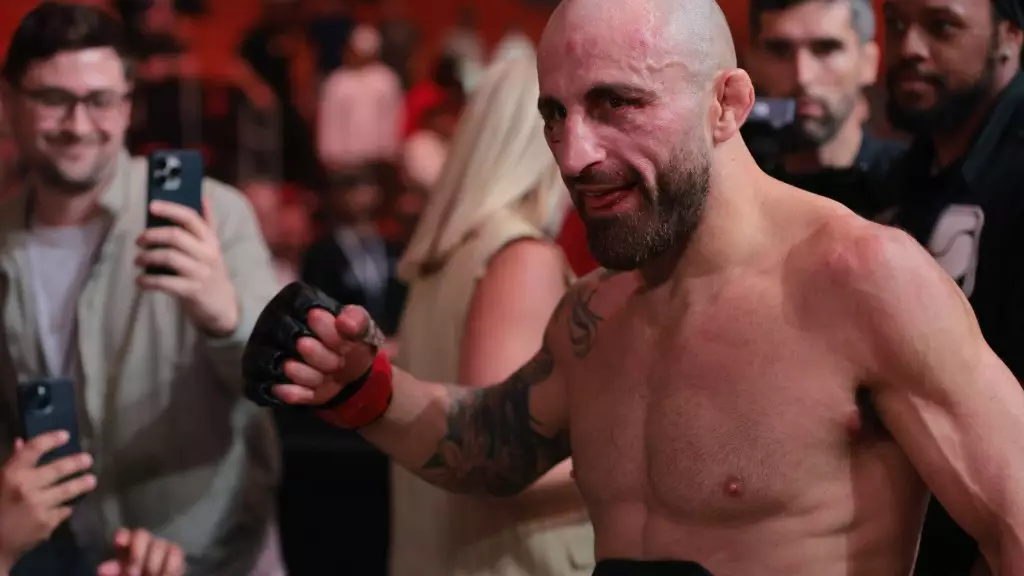
The world of mixed martial arts, particularly the UFC, is a crucible of intense competition where animosity and admiration often walk hand-in-hand. At UFC 314, this dynamic was on full display as former featherweight king Max Holloway offered his perspective on Alexander Volkanovski’s triumphant return to reclaim his title. Having faced Volkanovski three times previously, Holloway’s commentary carried a unique weight, reflecting the complex emotions inherent in elite athletic rivalries.
Understanding the Respect Between Champions
Max Holloway’s genuine joy witnessing Alexander Volkanovski’s successful bid to regain the featherweight championship underscores a powerful phenomenon that transcends mere rivalry deep-seated respect. When asked to weigh in on the fight’s outcome, Holloway didn’t shy away from offering a definitive score, awarding Volkanovski a clear 49-46 victory. This insightful analysis highlights not only his sharp analytical mind as a fighter but also his profound appreciation for the sport itself, even from the perspective of a former adversary. It’s a testament to the athlete’s mindset that he can acknowledge and celebrate the brilliance of a rival, especially after such a significant performance.
The Art of Strategy Over Brute Force
Holloway’s appreciation for Volkanovski’s tactical execution speaks volumes about his understanding of what it truly takes to be a champion. It’s not just about power or aggression; it’s about intelligent fighting, unwavering resilience, and the crucial ability to adapt on the fly. During his breakdown of the fight, Holloway specifically noted Volkanovski’s composure, his effective implementation of a game plan, and his avoidance of the kind of wild exchanges that could have derailed his efforts. The bout showcased Volkanovski’s mastery of a point-fighting style, a method sometimes criticized for lacking flash but undeniably effective in securing victories against top-tier competition.
A Narrative of Resilience and What’s Next
Holloway’s commentary paints a vivid picture of modern mixed martial arts, where athletic prowess is seamlessly blended with tactical intelligence. The story of Volkanovski’s ability to overcome adversity and secure a victory against Diego Lopes after facing significant challenges within the octagon adds another layer to this narrative of resilience. Holloway’s praise isn’t merely a formality; he clearly recognizes the immense value of this win in the ever-evolving landscape of the UFC’s featherweight division, which has seen its share of shake-ups and emerging threats. Looking ahead, Holloway’s insights into potential future challengers for Volkanovski are both thoughtful and strategic. He acknowledges the inherent unpredictability of MMA matchmaking while also suggesting contenders like Yair Rodriguez or Movsar Evloev. The emergence of rising stars, such as Aaron Pico, also hints at exciting future matchups, mirroring the cyclical nature of the sport where new challengers constantly emerge, eager to dethrone established champions and write their own chapter in UFC history.