

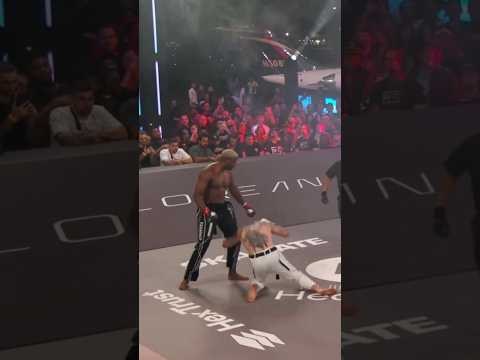
The world of mixed martial arts is no stranger to sudden shifts and unexpected turns. Recently, a particular fight booking has ignited passionate discussions, centering on Kai Asakura’s immediate title shot in the UFC. His scheduled bout against flyweight champion Alexandre Pantoja at UFC 310 has raised eyebrows, especially among seasoned fighters like Kai Kara-France. Asakura, a former RIZIN standout, enters the UFC spotlight with a respectable 21-4 record, yet he has yet to compete under the UFC banner.

The Meritocracy Question in MMA
Kara-France, boasting a wealth of experience and a 25-11 professional record, has openly questioned the fairness of this opportunity. His concerns highlight a broader issue within the sport regarding the criteria for title contention. In a recent interview, he expressed his frustration, stating, „They have the wrong Kai.“ After securing a victory against Steve Erceg, Kara-France believed he had earned his path to a championship fight. Instead, the UFC has opted for a newcomer who hasn’t yet proven themselves within the organization. This decision prompts legitimate questions about meritocracy in combat sports. Should fighters who have dedicated years to honing their skills and competing in grueling divisions have to step aside for someone entering the arena without the same level of organizational experience? Kara-France’s sentiments resonate with many who have faced similar challenges within the UFC, enduring tough fights and extensive training camps only to see someone with less organizational tenure receive a shot at the belt.
Balancing Sport and Business Interests
The uproar isn’t solely about individual aspirations; it delves into the very structure of competition within the UFC. While Kara-France’s arguments are rooted in fairness and demonstrated accomplishment, it’s crucial to acknowledge that the UFC operates not just as a sporting league but also as a commercial entity. The decision to elevate Asakura might stem from his potential to attract a wider audience, particularly those interested in international talent. Exploring new markets, such as Asia, signals the UFC’s willingness to tap into different demographics. However, this strategy carries inherent risks to the integrity of the sport. Both fans and fighters may question whether entertainment value should supersede hard-earned qualifications. Kara-France himself recognizes the unusual timeline of Asakura’s rapid ascent but also sees a silver lining. He admits that this controversy, while seemingly unfair, could ultimately shed more light on the flyweight division.
Asakura’s Chance to Prove His Worth
The ensuing discussion surrounding Asakura’s qualifications presents him with an opportunity to prove his doubters wrong. In professional sports, perceptions can shift dramatically following decisive performances. Kara-France’s reflections are sharp and poignant, prompting a deeper examination of the process by which fighters earn title shots within the UFC. While diversity and global representation are vital for the sport’s growth, clarity regarding how fighters ascend to the top is equally indispensable. As the MMA landscape continues to expand and evolve, events like UFC 310 can serve as pivotal moments, testing not only the fighters themselves but also the very framework that dictates success and recognition in this fiercely competitive international arena. Ultimately, the outcome of Asakura’s fight will offer further insight into how meritocracy and commercial interests can coexist—or collide—within the realm of the Ultimate Fighting Championship.









 {"prefetch":[{"source":"document","where":{"and":[{"href_matches":"/*"},{"not":{"href_matches":["/wp-*.php","/wp-admin/*","/wp-content/uploads/*","/wp-content/*","/wp-content/plugins/*","/wp-content/themes/kadence/*","/*\\?(.+)"]}},{"not":{"selector_matches":"a[rel~=\"nofollow\"]"}},{"not":{"selector_matches":".no-prefetch, .no-prefetch a"}}]},"eagerness":"conservative"}]}